The topic I didn’t expect to recommend an Intel GPU in 2026, but here we are is currently the subject of lively discussion — readers and analysts are keeping a close eye on developments.
This is taking place in a dynamic environment: companies’ decisions and competitors’ reactions can quickly change the picture.
At a time when GPU prices are off the rails, we have to be practical. Judging a GPU solely by its performance always tells you that the best consumer option is the RTX 5090, but the reality is that most of us don’t need that much firepower in a PC.
When looking through the lens of value, there’s only one GPU that’s actually worth buying right now, and it’s definitely not the one most people think of. It’s not Nvidia, it’s not AMD … it’s actually Intel.
The GPU market may have seen worse times in recent years, during the 2021 shortage, but only marginally so. GPUs were extremely overpriced back then, and they also weren’t readily available. I still remember the RTX 30-series selling out in seconds, or 100-200 people standing in lines outside of retailers awaiting a GPU restock. We had two issues all at once: there were no GPUs to be had, and the ones that did get sold were often marked up to 300% above MSRP.
Now, the problem is different. You can get any GPU you want at any given time, even the coveted RTX 5090, but you won’t be able to get it at its recommended list price. We have the RAM-pocalypse to thank here, of course. As DRAM shot up in price, the GPUs eventually followed, leaving us in dire straits. Can’t have a GPU without VRAM, after all (although you can have one with not enough VRAM, but we’ll circle back to that).
Pretty much every GPU sells above the MSRP, even the RTX 5060 and the RX 9060 XT, and that wasn’t the case just a few months ago. Sure, the RTX 5060 is only something like $30 to $70 above its recommended price of $299, but that’s a lot given the total price of the GPU. The RX 9060 XT also started with a $299 price tag, but Amazon sells the 8GB VRAM version for closer to $470.
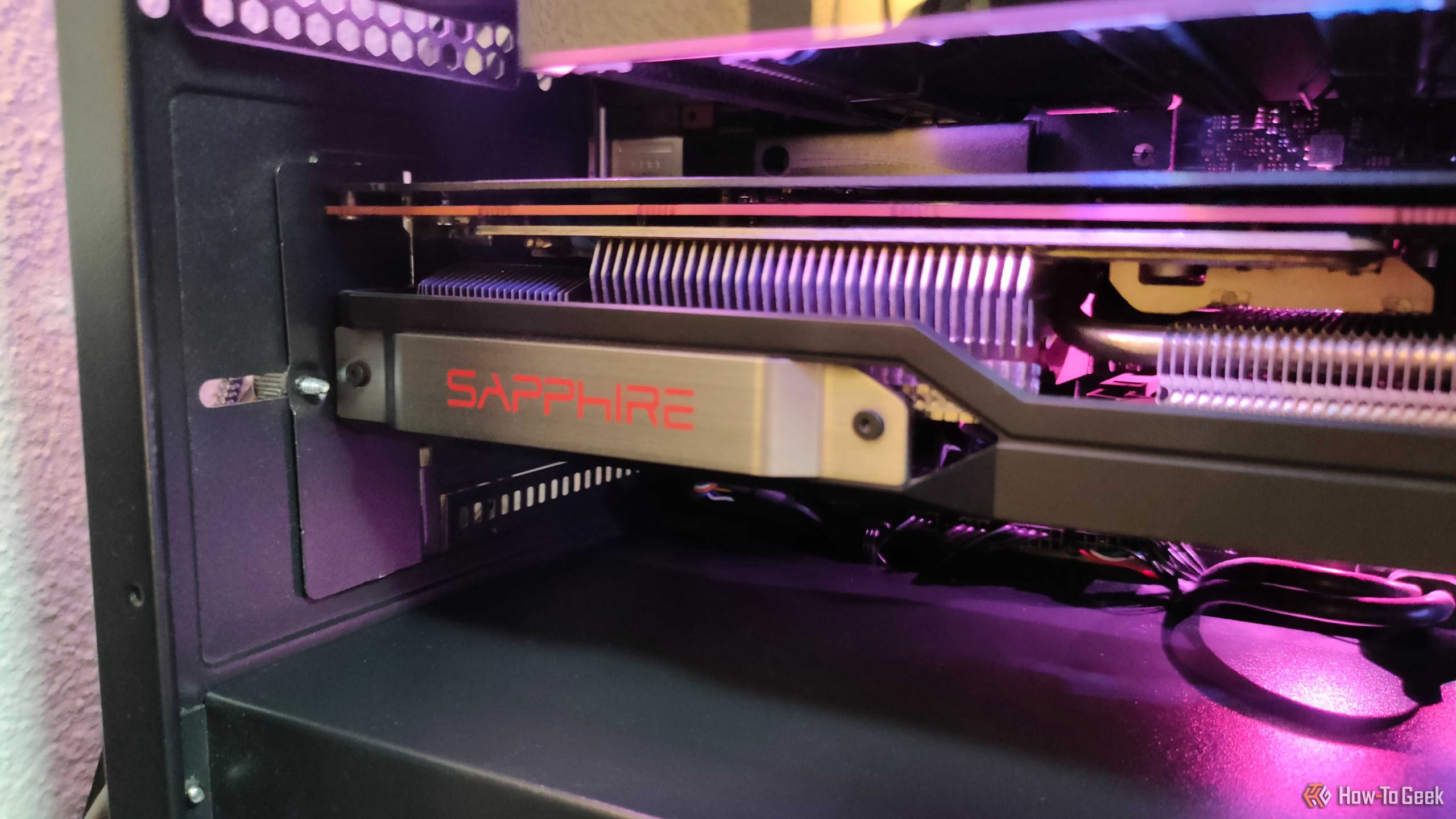
Then, there’s Intel. It’s somehow the only GPU that appears to have avoided the worst of the price increases. But more than that, it’s the only one of the three that’s actually decent value.
Intel’s Arc B580 gives you copious amounts of VRAM for the price, and it’s more than good enough for most 1080p gamers.
The B580’s advantage is, of course, VRAM. It’s not that it uses some advanced memory; it’s actually worse than the RTX 5060 in that regard, as Intel’s using GDDR6, and Nvidia moved on to GDDR7. But the difference is that you’re getting 12GB of VRAM across a 192-bit bus. Meanwhile, the RTX 5050 (a cheaper, although worse card) and AMD’s RX 9060 XT both use 8GB across a 128-bit interface. (Yes, I know that AMD’s also got the 16GB version of the RX 9060 XT, but that one is far pricier than the Arc B580.)
It’s not just that 8GB of VRAM isn’t enough for proper gaming in 2026. It’s also that the narrow 128-bit interface really limits the card’s capabilities. The B580’s 456GB/s of memory bandwidth is slightly higher than the RTX 5060’s, and that’s despite it using an older memory type. Thank the memory interface for that.
Of course, VRAM is available elsewhere, but only if you’re willing to pay for it. The RTX 5060 Ti and the RX 9060 XT both come in 16GB versions, and both GPUs are considerably faster than the B580. The problem is that they cost above $450 for the AMD card and $560 for Nvidia. That’s a massive markup from Intel’s $310-$370 (depending on retailer).
5 iconic Nvidia GPUs you must replace now that official driver support is dead
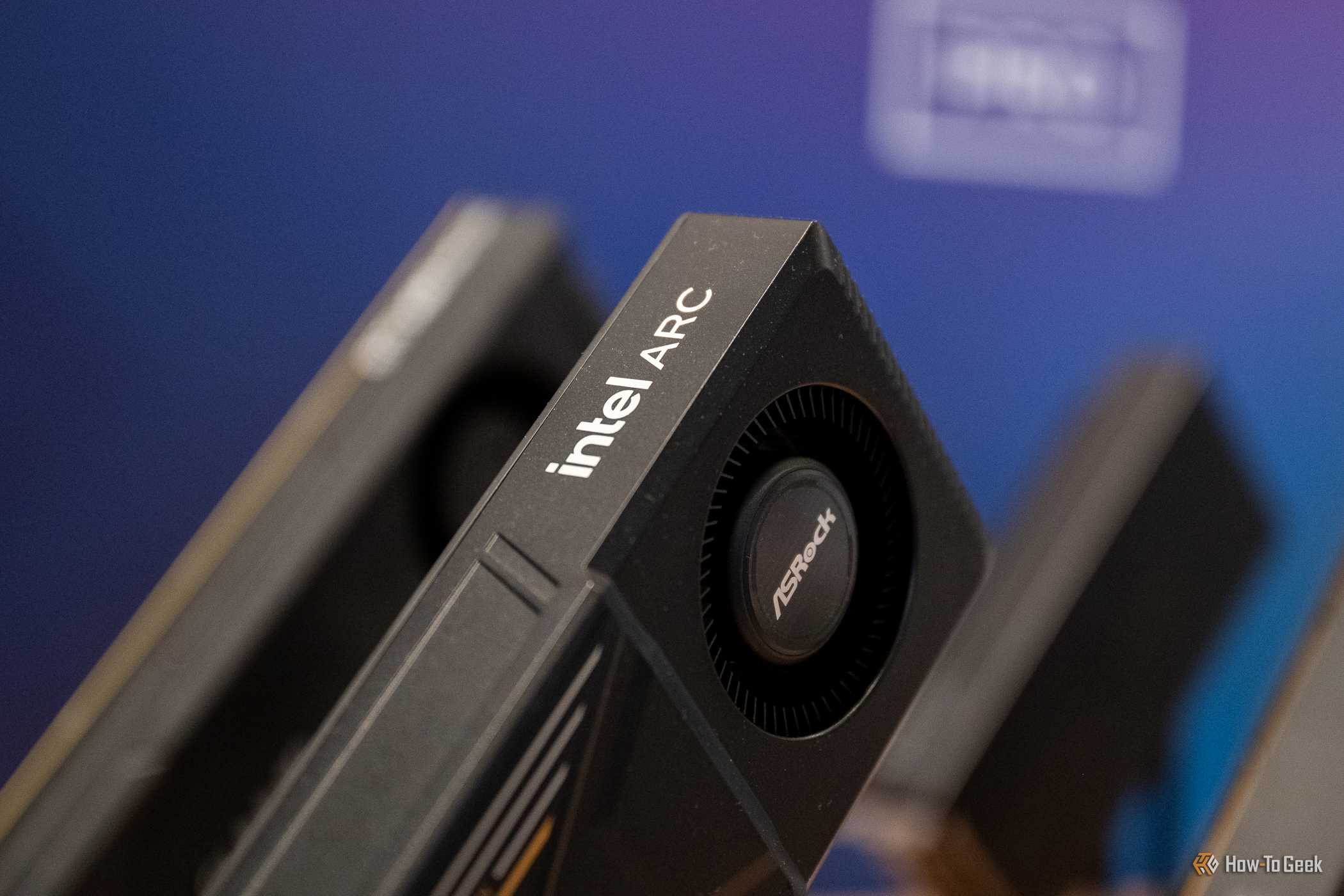
I think it’d be tough for just about any company to decide to make GPUs right now, with Nvidia controlling well over 90% of the consumer market. But Intel gave it a go, and at first, the results weren’t good.
Intel Arc Alchemist, the previous generation, had a lot to improve in the way of drivers. Performance could vary wildly between games, especially in older DirectX 9 and DirectX 11 titles, and new releases occasionally arrived with crashes or other problems that required a driver update. You couldn’t take it at face value and assume it’d perform well based on specs alone.
Battlemage, the generation the B580 is the flagship of, is in a much better place. Compatibility is no longer a deal breaker, and problems are much more infrequent.
Performance-wise, don’t expect a powerhouse. The Intel Arc B580 is perfectly sufficient for 1080p gameplay, but the Tom’s Hardware GPU Hierarchy puts it at around the same raster performance as the RTX 3060 Ti. On the other hand, it’s not too far behind the RTX 5060, and that’s largely thanks to the VRAM headroom.
It’s hard to discuss the subject without mentioning DLSS. Nvidia’s DLSS, as well as its ray tracing capabilities, have both Intel and AMD beat in most scenarios. And yes, the frame gen gives you a lot more performance on even a budget card like the RTX 5060. But eventually, that 8GB VRAM will catch up to you, and you might find yourself wishing you had more — the one problem DLSS can’t really fix.
If you just want a GPU that lets you play your games without needing to max out every setting, the B580 can do that, and the extra VRAM will give it more longevity in AAA games. For some, it might be an option to just wait it out. Maybe when the new generation of cards eventually comes around, be it in 2027 or 2028, the prices will be less horrible. For now, value-wise, the Arc B580 remains hard to beat for gamers who don’t expect miracles.
Nvidia’s RTX 5060 Ti (this time made by Asus) comes in two variants: 8GB and 16GB. The 16GB is a lot pricier, but with growing VRAM constraints, it remains the better pick.
The AMD Radeon RX 9060 XT 16GB is a budget/midrange GPU with a lot to offer. It’ll fit great in all sorts of builds, especially those aimed at the 1080p to the 1440p range.
About the Author