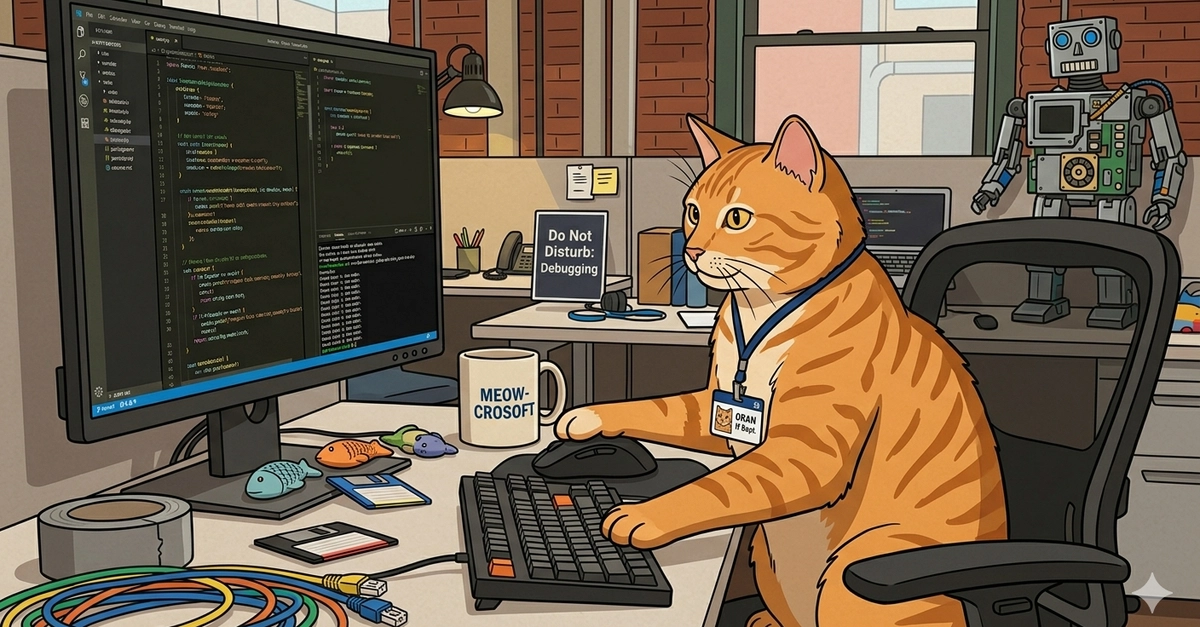
The topic of Coding Cat Oran Ep5, The IT Manager Nobody Hired is currently the subject of lively debate — readers and analysts are keeping a close eye on developments.
This is taking place in a dynamic environment: companies’ decisions and competitors’ reactions can quickly change the picture.
Six months at Rust-Belt Manufacturing. The permission system was running. Inventory was live. The approval workflow hadn’t broken once.
“We need a new system for production scheduling. And I want you to lead it — not just the coding. The whole thing. Requirements, design, timeline, rollout.”
“It sounds like your job. You’re the one who knows how to talk to the teams and turn it into something that works.”
No raise negotiation. No interview panel. It just happened. Because in a small company, titles don’t come from HR — they come from trust. And Oran had earned it the hard way.
Month 1: He was a prompt programmer. He typed descriptions into AI and shipped whatever came out. He thought speed was the skill. Build fast, demo fast, move on.
Month 2: He met the users. He learned that requirements documents lie — not on purpose, but because the people who write them aren’t the people who do the work. He learned to watch before he asked, and to ask before he built.
Month 3: He discovered that the database isn’t just storage — it’s where business rules live. Permission boundaries, approval thresholds, audit trails. When logic lives in SQL, it survives everything: framework changes, rewrites, developer turnover. He learned to think in tables.
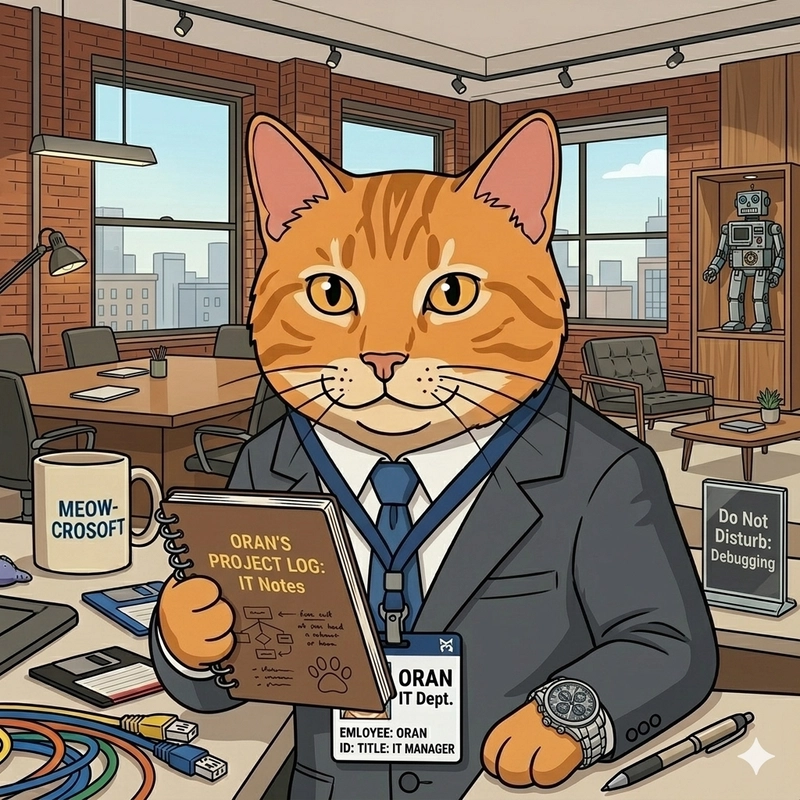
Month 4: He stood in front of a room and failed. Then he stood in front of the same room and succeeded. The difference wasn’t the system — it was the language. He learned to translate technologies into outcomes. Not “five tables with junction mappings” but “you see only what’s relevant to your job.”
Month 5–6: People started coming to him. Not with bug reports — with ideas. “Can we track supplier lead times?” “Can we see which orders are late?” “Can we give the external auditor a login?” Each conversation was a mini requirements session. And Oran was running them naturally, without a methodology or a framework. Just a notebook, good questions, and the habit of listening before building.
AI is a tool, not a teacher. It writes code when you tell it what to write. But it can’t sit with Duke and watch how receiving actually works. It can’t read Ms. Lin’s face when she says “who changed that number.” It can’t stand in a conference room and feel the silence when nobody understands your slide. The decisions that matter — what to build, for whom, and why — those are still yours.
SQL is a thinking language. Not just a query language. When you model a business process in tables and relationships, you’re forced to be precise. “Approval” stops being a vague word and becomes: who approves, at what threshold, in what order, and what’s the record. The database doesn’t accept hand-waving.
Translation is the real skill. A developer who can explain a system to the warehouse manager AND model it in SQL AND implement it in code — that person isn’t just a programmer. That person is the architect, the analyst, and the project manager. In a small company, that’s the whole IT department.
Oran started the production scheduling project the next Monday. This time, he didn’t open Cursor first.
One year later, Rust-Belt Manufacturing has four internal systems — all designed by Oran, all running on the same permission model, all speaking human to the teams that use them.
Oran still writes prompts. He still uses AI to code faster. But he decides what to build before he decides how to build it.
Thanks for following Oran’s story. If the permission system chapters sounded familiar — the 5-table schema, the audit trail, the feature-level access controls — I wrote the complete technical guide:
85 pages. PostgreSQL, MySQL 8+, SQL Server. The guide Oran wished he had on day one.
Are you sure you want to hide this comment? It will become hidden in your post, but will still be visible via the comment’s permalink.
For further actions, you may consider blocking this person and/or reporting abuse
DEV Community — A space to discuss and keep up software development and manage your software career
Built on Forem — the open source software that powers DEV and other inclusive communities.
Why it matters
News like this often changes audience expectations and competitors’ plans.
When one player makes a move, others usually react — it is worth reading the event in context.
What to look out for next
The full picture will become clear in time, but the headline already shows the dynamics of the industry.
Further statements and user reactions will add to the story.