
The topic of Logseq's block structure fixed my note-taking habit in one unexpected way is currently the subject of lively debate — readers and analysts are keeping a close eye on developments.
This is taking place in a dynamic environment: companies’ decisions and competitors’ reactions can quickly change the picture.
I used to wait until I had something worth saying before I'd write it down. A meeting would happen, an idea would surface, and I'd let it marinate until it felt complete enough to commit to a note. Then I'd open Notion or Apple Notes, stare at a blank page, and either write three paragraphs or nothing at all.
Logseq's block-based structure broke that habit. Instead of treating notes as documents that need beginnings and endings, it treats every single line as its own reusable, linkable unit. That sounds like a UI detail, and it technically is, but it quietly changed what I capture, how much friction I feel when writing, and how willing I am to preserve half-formed thoughts.
Traditional note apps treat the page as an atomic unit. You open a new note, you get a title field and a blank canvas. That's fine for finished writing, but it creates invisible pressure when you're trying to capture something in progress. I'd sit in a meeting and think, "I should write this down," but then I'd pause. Does this deserve its own note? Should I add it to an existing one? What's the title? By the time I decided, the moment had passed, or the idea had dissolved.
Roam Research pioneered the block-based approach in 2020, treating every bullet point as a first-class object with its own URL and bidirectional links. Logseq took that foundation, made it open-source and local-first, and refined the experience. Now, each dash or bullet you type becomes a discrete block that can be referenced, embedded, or expanded elsewhere.
That shift removes the "what kind of note is this?" question entirely. You just write a line. If it grows, it grows. If it stays single-line forever, that's fine too.
The first thing that changed: I stopped finishing sentences before saving them. In Obsidian or Notion, I'd write "Team sync notes" as a heading, then feel obligated to fill in bullet points underneath. In Logseq, I'd just write:
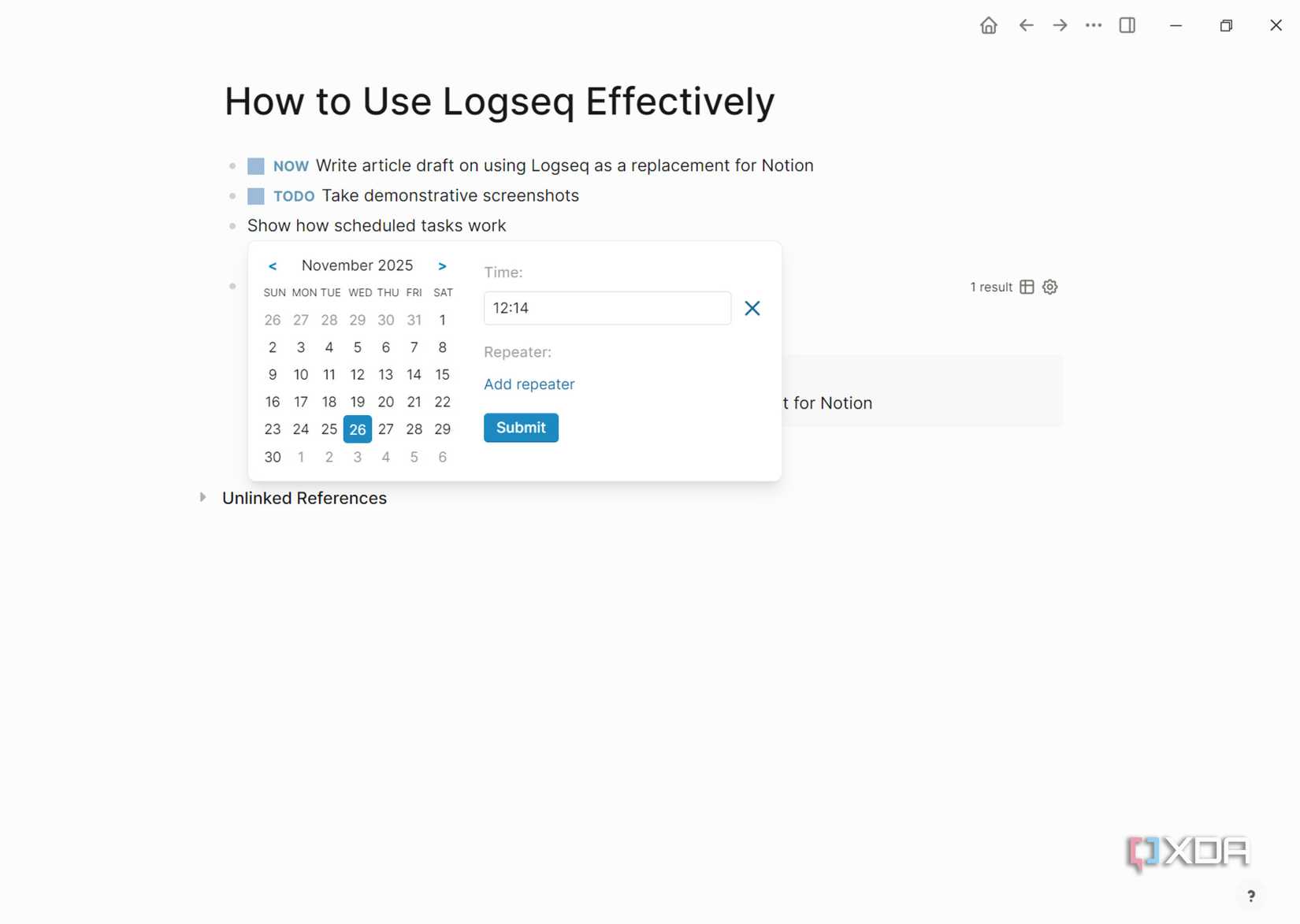
That's it. One block. No context, no explanation, just the kernel of the thought. Later, I might indent a sub-block underneath ("She mentioned delays with the auth flow") or link it to a project page. But the initial friction dropped to nearly zero.
Logseq is block-first with documents emerging when you need them. Every block has a unique identifier and can become a page with one click. This matters because the format dictates behavior. When the smallest unit of storage is a page, you batch ideas until you have enough to justify a page. When it's a block, you capture the moment you notice something.
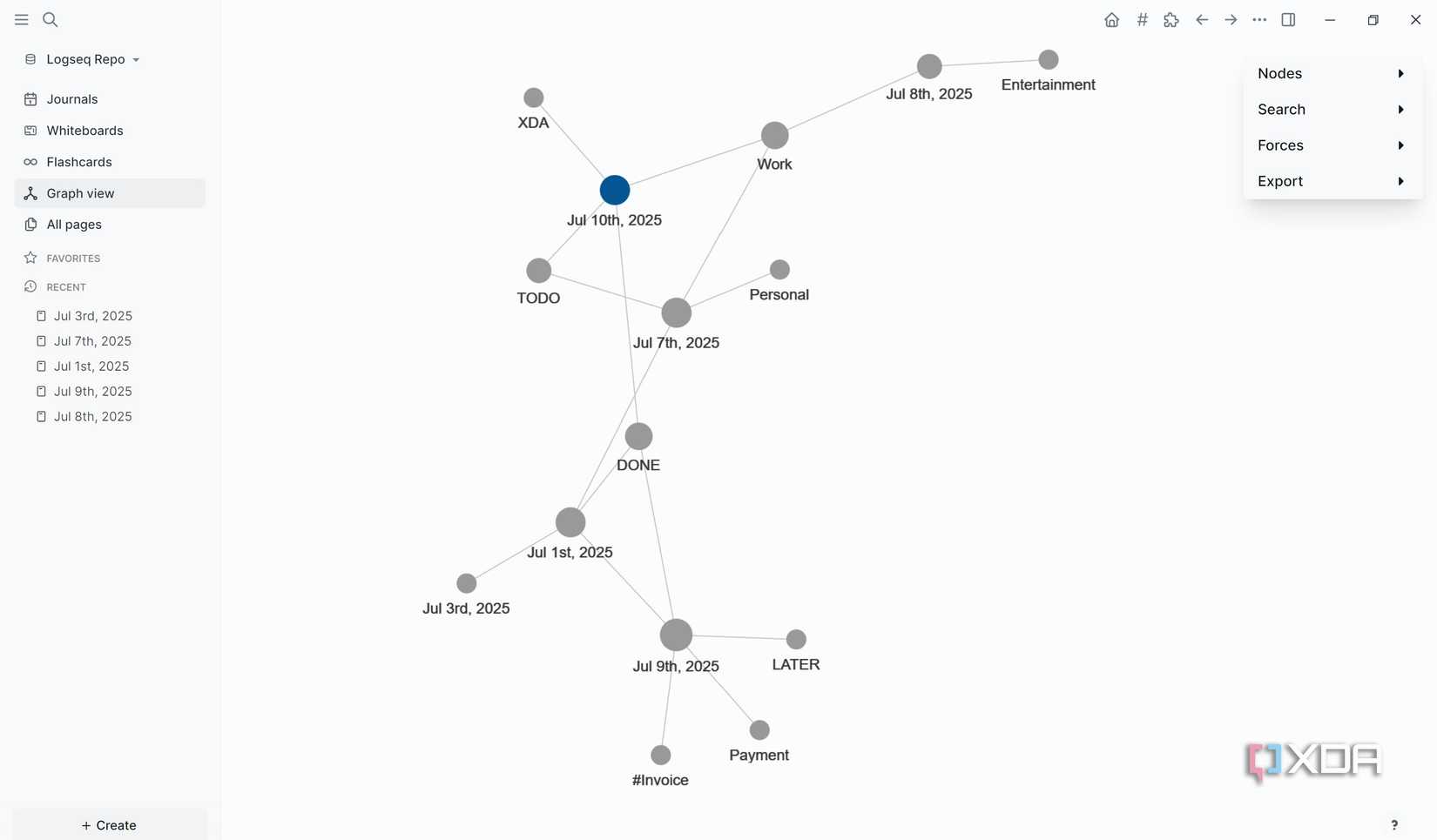
Here's where Logseq's design gets interesting: every block is also a potential page. You're not choosing between "quick note" and "long-form document" because you're deferring that choice.
I'll write [[Design system audit]]. That double-bracket creates a link. Later, when I'm ready, I click through and start expanding:
Each of those sub-blocks could expand further. "Color tokens" might become its own page with screenshots, hex codes, and proposed fixes. Or it might stay a single line forever. The system doesn't care. You're building a graph of connected ideas without needing to declare their final form.
I've tried Evernote, Notion, Obsidian, Apple Notes, Bear, Craft, and Capacities. They're all competent. The reason Logseq stuck isn't its features but the block structure removed the activation energy I didn't know I was fighting.
Most productivity advice focuses on workflows and templates, but format shapes behavior more than we admit. Google Docs encourages long-form writing because it looks like a printed page. Twitter's character limit forced brevity into a virtue. Logseq's outliner interface made me realize I'd been avoiding note-taking because I was treating every thought like it needed to be an essay.
Now my daily journal is a mess of single-line blocks, some linked, some orphaned, some expanded into full project pages. It looks chaotic. But when I search for something or follow backlinks, I find fragments I'd have never written if they required more structure upfront.
Block-based note-taking won't fix a broken workflow, and Logseq isn't the only tool exploring this model. for example, Tana offers similar approaches with different tradeoffs. But if you've ever felt resistance to opening a note app because it demands too much upfront, the format might be the problem.
I'm capturing more now because each block is low-stakes. Some grow into pages. Most don't. And that's exactly the point.
An open-source and privacy-focused knowledge management app for taking notes and managing information
Why it matters
News like this often changes audience expectations and competitors’ plans.
When one player makes a move, others usually react — it is worth reading the event in context.
What to look out for next
The full picture will become clear in time, but the headline already shows the dynamics of the industry.
Further statements and user reactions will add to the story.