
Michael Caine and Matthew McConaughey have licensed their voices to AI — but not every ‘iconic’ voice on the platform can consent is currently attracting attention in the technology world.
Experts believe this development may influence how digital platforms evolve
over the coming years.
Name a more recognizable voice than Michael Caine. He’s narrated documentaries, starred in movies and, to many, has one of the most iconic voices of all time. Now his voice is available on demand — to anyone willing to pay for it.
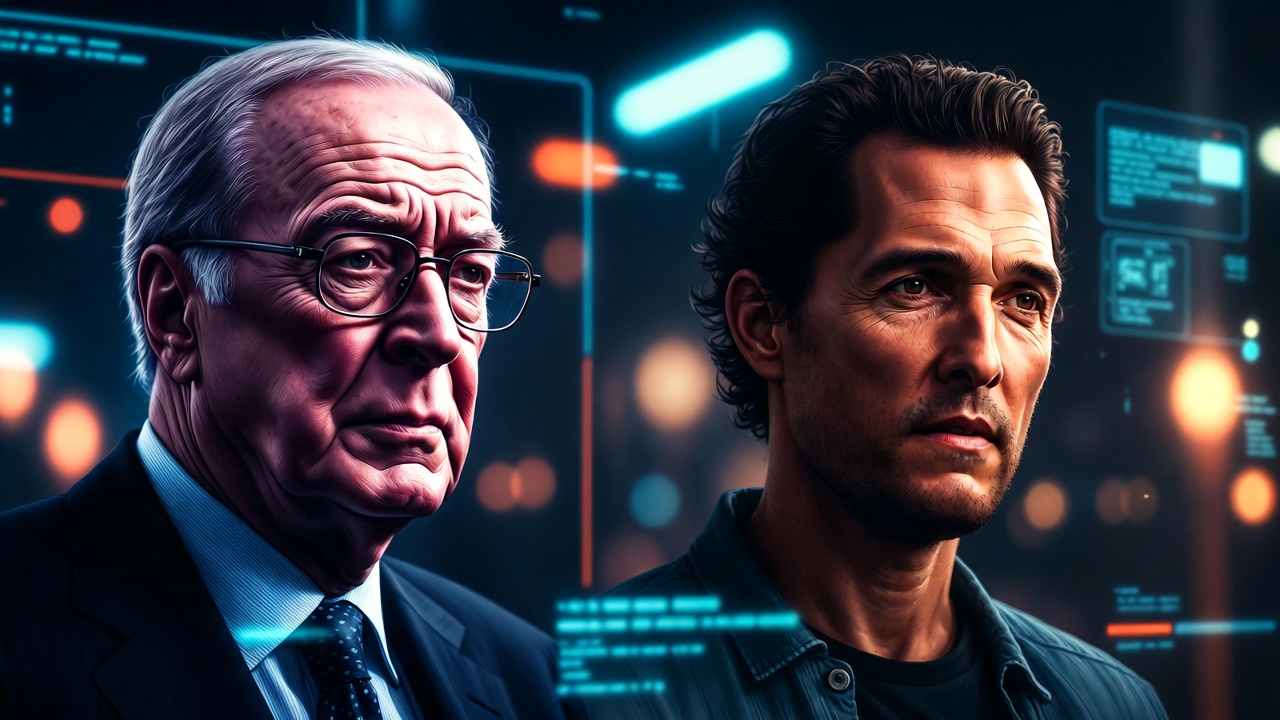
In early March 2026, AI company ElevenLabs announced that Caine had licensed his voice to them, which means it’s available through two of their products — ElevenReader, an app that lets you listen to any text read aloud in a voice of your choosing, and the Iconic Marketplace, which is ElevenLabs’ licensing platform for celebrity voices.
He’s not alone. Matthew McConaughey (who has also invested in the company) is using ElevenLabs to translate his newsletter into Spanish, but in his voice. ElevenLabs says there are more than 25 other iconic voices currently available on the platform, including Judy Garland, Art Garfunkel, Liza Minnelli, Alan Turing and Maya Angelou.
If you noticed that some of those people are no longer alive and are wondering how they consented to this, well, they didn’t. We’ll come back to that.
Founded in 2022, ElevenLabs is an AI audio company specializing in generating speech that sounds almost indistinguishable from a real human voice. Its tools are used by podcasters, publishers, game developers, and other businesses. It’s grown rapidly and is now one of the most prominent companies in the AI audio space.
The Iconic Marketplace is more on the business side of things. The official pitch is that it’s “a curated, two-sided platform where companies can request access to iconic talent for projects and content.” This means that talent retains ownership of their voice and companies and creative teams can request approval to use it for specific projects. In theory, it’s built on consent, compensation and credit.
Caine’s own statement also leans into the empowerment framing: “It’s not about replacing voices; it’s about amplifying them, opening doors for new storytellers everywhere. I’ve spent a lifetime telling stories. ElevenLabs will help the next generation tell theirs.”
It’s a powerful sentiment, but it’s worth thinking about more deeply. Let’s start with the people that didn’t get to consent. Maya Angelou, Alan Turing and Judy Garland didn’t sign licensing agreements. Instead, someone else made a decision on their behalf, or on behalf of their estates, that their voices could be commercially licensed.

Whether that sits comfortably with you or not probably depends on your view of digital legacy, estate rights, and what it means to speak for someone who can no longer speak for themselves.
For living performers, it’s more complicated. There’s a genuine argument here that licensing your voice officially, so you retain some control over how it’s used with compensation and the ability to say no to specific projects, is a good thing. Or at least better than the alternative: having it cloned anyway, without your knowledge or consent.
We know many unauthorized voice clones already exist. ElevenLabs is positioning the Iconic Marketplace as the legitimate version of something that was going to happen anyway.
But this feels like another example of saying, “well, it’s better than the worst case scenario”, which is a low bar and an increasingly common excuse in the tech world. It also doesn’t fully address what it means when a trusted, recognized voice is used to say things its owner never said — even with their permission.
for instance, Michael Caine’s voice carries a certain authority and cultural weight. It could be used to deliver a corporate explainer or a branded podcast, and audiences would hear it through the same associations they bring to him.
We’ve already reported on the growing emotional dependence people are developing toward AI — the parasocial relationships, the sense of genuine connection with something that is not human. Now imagine a company licensing Caine’s voice for a chatbot. That authority, that familiarity, those decades of cultural trust, all deployed in an interaction designed to feel personal.
That is hypothetical for now, but this space moves fast, and we have a habit of noticing the problems only once they are already embedded.
I think there’s also a more urgent concern here. Most people engaging with AI have encountered it through text, images and video. But what tends to get less attention is how far AI-generated voice has come.
The gap between an AI voice and a real one has (pretty much) closed. If you haven’t heard it yet, ElevenLabs’ tech innovation is a very useful and also very unsettling demonstration.
This matters beyond celebrity audiobooks. as reported by security company Group-IB, AI-generated voice fraud — known as “vishing”, from “voice” and “phishing” — is rising sharply.
The method is straightforward. A scammer can use an AI tool (there are many to choose from) to replicate the voice of someone the victim knows and trusts, whether that’s a family member, a colleague or an authority figure.
They then use it to manipulate them into transferring money or sharing sensitive information. as reported by Group-IB, fraud losses from these scams are predicted to reach a staggering $40 billion by 2027.
What makes vishing particularly dangerous is that it bypasses the scepticism many of us have learned to apply to much more obvious scams, like a strange email or an unknown number. A familiar voice, even a slightly distorted one, short-circuits that rational thinking.
I’m really clued up on AI at this point but even I’m not sure how I’d react if one of my parents called in distress. Or, you know, a voice that sounded like one of my parents.
Security specialists now recommend agreeing on a private code word with partners, friends and close family members because voice alone can no longer be trusted as proof of identity.
Voice synthesis tech innovation isn’t going anywhere and there are plenty of other AI voice and audio companies besides ElevenLabs. But the normalization of AI voices, whether they’re celebrity voices or not, does blur an already fuzzy line. The more we encounter synthesized voices in legitimate, everyday contexts, the harder it’s going to become to hold onto the instinct that something might not be real. So, is it worth it?
Well, that depends on who you’re asking. For Michael Caine, there’s presumably a strong financial and legacy case to be made. For ElevenLabs, there’s huge commercial value in attaching recognizable, trusted voices to their platform. For everyday users, there is a genuine appeal in hearing your next article or audiobook in the voice of a screen legend.
But for everyone else — navigating a world where fraud calls can now sound like our relatives and where audio cannot be automatically trusted — the cost is a further erosion of reality. I’m personally not sure that’s a reasonable price for a more entertaining commute.
Follow TechRadar on Google News and add us as a preferred source to get our expert news, reviews, and opinion in your feeds. Make sure to click the Follow button!
And of course you can also follow TechRadar on TikTok for news, reviews, unboxings in video form, and get regular updates from us on WhatsApp too.
Becca is a contributor to TechRadar, a freelance journalist and author. She’s been writing about consumer tech and popular science for more than ten years, covering all kinds of topics, including why robots have eyes and whether we’ll experience the overview effect one day. She’s particularly interested in VR/AR, wearables, digital health, space tech and chatting to experts and academics about the future. She’s contributed to TechRadar, T3, Wired, New Scientist, The Guardian, Inverse and many more. Her first book, Screen Time, came out in January 2021 with Bonnier Books. She loves science-fiction, brutalist architecture, and spending too much time floating through space in virtual reality.
Why This Matters
This development highlights the rapid pace of innovation in the technology sector.
Companies are constantly pushing boundaries in order to stay competitive.
Analysts suggest that such changes could influence future product design,
user expectations, and industry standards.
Looking Ahead
As technology continues to evolve, developments like this may shape the next
generation of digital services and consumer experiences.
Industry watchers will continue to monitor how this story develops and what
impact it may have on the broader technology landscape.