The topic of Multi-Agent A2A with the Agent Development Kit(ADK), AWS Lightsail, and Gemini CLI is currently the subject of lively debate — readers and analysts are keeping a close eye on developments.
This is taking place in a dynamic environment: companies’ decisions and competitors’ reactions can quickly change the picture.
Leveraging the Google Agent development Kit (ADK) and the underlying Gemini LLM to build Multi-Agent Applications with A2A protocol support using the Python programming language.
Python has traditionally been the main coding language for ML and AI tools. The goal of this article is to provide a multi-agent test bed for building, debugging, and deploying multi-agent applications.
This is one of the first deep dives into a Multi-Agent application leveraging the advanced tooling of Gemini CLI. The starting point for the demo was an existing Codelab- which was updated and re-engineered with Gemini CLI.
Python is an interpreted language that allows for rapid development and testing and has deep libraries for working with ML and AI:
One of the downsides of the wide deployment of Python has been managing the language versions across platforms and maintaining a supported version.
As of writing — the mainstream python version is 3.13. To validate your current Python:
Amazon Lightsail is an easy-to-use virtual private server (VPS) provider and cloud platform designed by AWS for simpler workloads, offering developers pre-configured compute, storage, and networking for a low, predictable monthly price. It is ideal for hosting small websites, simple web apps, or creating development environments.
If not pre-installed you can download the Gemini CLI to interact with the source files and provide real-time assistance:
Once you have all the tools and the correct Node.js version in place- you can test the startup of Gemini CLI. You will need to authenticate with a Key or your Google Account:
Gemini CLI needs a consistent, up to date version of Node. The nvm command can be used to get a standard Node environment:
GitHub – nvm-sh/nvm: Node Version Manager – POSIX-compliant bash script to manage multiple active node.js versions
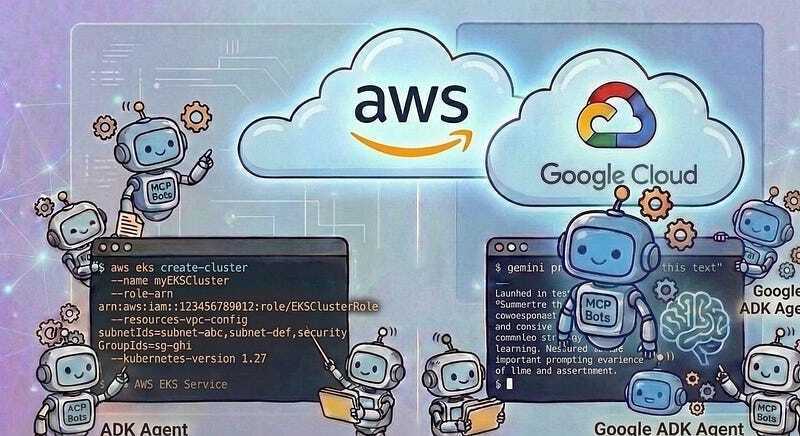
The Google Agent development Kit (ADK) is an open-source, Python-based framework designed to streamline the creation, deployment, and orchestration of sophisticated, multi-agent AI systems. It treats agent development like software engineering, offering modularity, state management, and built-in tools (like Google Search) to build autonomous agents.
Gemini CLI can be customized to work with ADK agents. Both an Agent development MCP server, and specific Agent skills are available.
The strategy for starting multi agent development is a incremental step by step approach.
First, the basic development environment is setup with the required system variables, and a working Gemini CLI configuration.
Then, ADK Multi-Agent is built, debugged, and tested locally. Finally — the entire solution is deployed to Google Cloud Run.
At this point you should have a working Python environment and a working Gemini CLI installation. All of the relevant code examples and documentation is available in GitHub.
The script will attempt to determine your shell environment and set the correct variables:
If your session times out or you need to re-authenticate- you can run the set_env.sh script to reset your environment variables:
Variables like PROJECT_ID need to be setup for use in the various build scripts- so the set_env script can be used to reset the environment if you time-out.
Then use the web interface — either on the local interface 127.0.0.1 or the catch-all web interface 0.0.0.0 -depending on your environment:
Special note for Google Cloud Shell Deployments- add a CORS allow_origins configuration exemption to allow the ADK agent to run:
Multi-Agent A2A with the Agent development Kit(ADK), Cloud Run, Agent Skills, and Gemini CLI
The main Makefile has been extended with extensive targets for managing the agents on the local development environment.
Gemini CLI has full access to the local agent logs for debugging and troubleshooting:
The project level Makefile has targets for managing the Agent deployment to serverless endpoints. First authenticate to AWS:
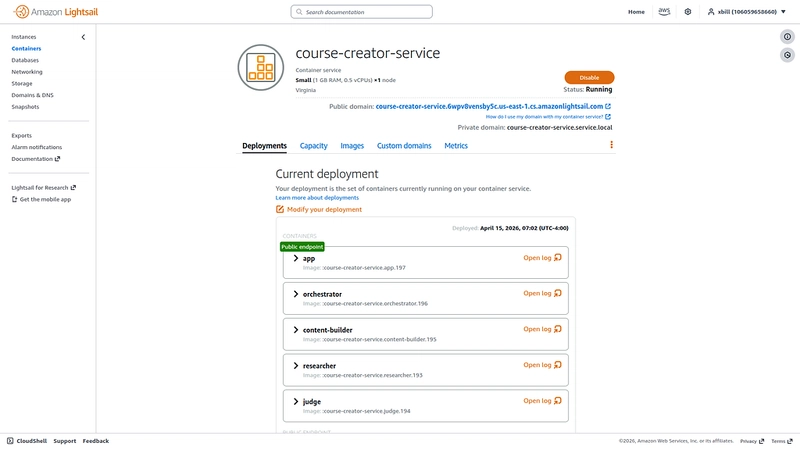
A utility script does the deployment to Lightsail. You can submit the build for cloud deployment:
The Agent development Kit (ADK) was used to build a multi-agent system with A2A support using the Gemini Flash LLM Model. This application was tested locally with Gemini CLI and then deployed to AWS Lightsail. Several key take-aways and lessons learned were summarized from debugging and testing the multi-agent system- including deep log reviews. Finally, Gemini CLI was used for a complete project code review.
Are you sure you want to hide this comment? It will become hidden in your post, but will still be visible via the comment’s permalink.
For further actions, you may consider blocking this person and/or reporting abuse
Join a global network of more than 1,000 professionals. Meet experienced Google technologies experts, influencers, and thought leaders. Explore the community, get advice, and network.
DEV Community — A space to discuss and keep up software development and manage your software career
Built on Forem — the open source software that powers DEV and other inclusive communities.
Why it matters
News like this often changes audience expectations and competitors’ plans.
When one player makes a move, others usually react — it is worth reading the event in context.
What to look out for next
The full picture will become clear in time, but the headline already shows the dynamics of the industry.
Further statements and user reactions will add to the story.