The topic of Claude Code installed my IDE, and now I can’t go back to manual setup is currently the subject of lively debate — readers and analysts are keeping a close eye on developments.
This is taking place in a dynamic environment: companies’ decisions and competitors’ reactions can quickly change the picture.
Lately, I’ve been testing out various AI coding apps, because whatever my feelings about AI are, they’re not going away any time soon. But most of them are a confusing mess of package managers, whether that’s things from npm, or bun, or brew, or wherever else that isn’t a Windows-packaged program. I know I should go use Linux or macOS because it’s slightly easier there, and I sometimes do, but I do most of my work on Windows.
And that’s before connecting to local LLMs, or adding additional skills, or MCP servers. It’s honestly a lot for someone who’s not a developer, and that got me looking for a better way. And I found one that can be installed by Claude Code (or your favorite LLM interface), as long as it has the ability to interact with your computer and to download from GitHub. It took minutes to set up a coding stack that would have taken hours previously, and the longest part was finding my API keys in various accounts.
OpenCode is already one of the best tools for vibe-coding, but it’s deliberately sparse to let you create the agentic IDE that fits your needs. Oh My OpenCode supercharges this, with 11 specialized AI agents with optimized models, tool permissions, and expertise for their roles.
The default is Sisyphus, the main orchestrator powered by Claude Opus 4.6. It can plan, delegate, and execute tasks with a 32K budget for thinking, but it’s there to keep the other 10 agents in line. Those include Hephaestus, the craftsman; Oracle, which makes architectural decisions; and the librarian, who does multi-repo analysis, looks up documentation, and so on.
It’s like installing VS Code, but suddenly having a full department under your supervision, and it’s pretty amazing to watch in action.
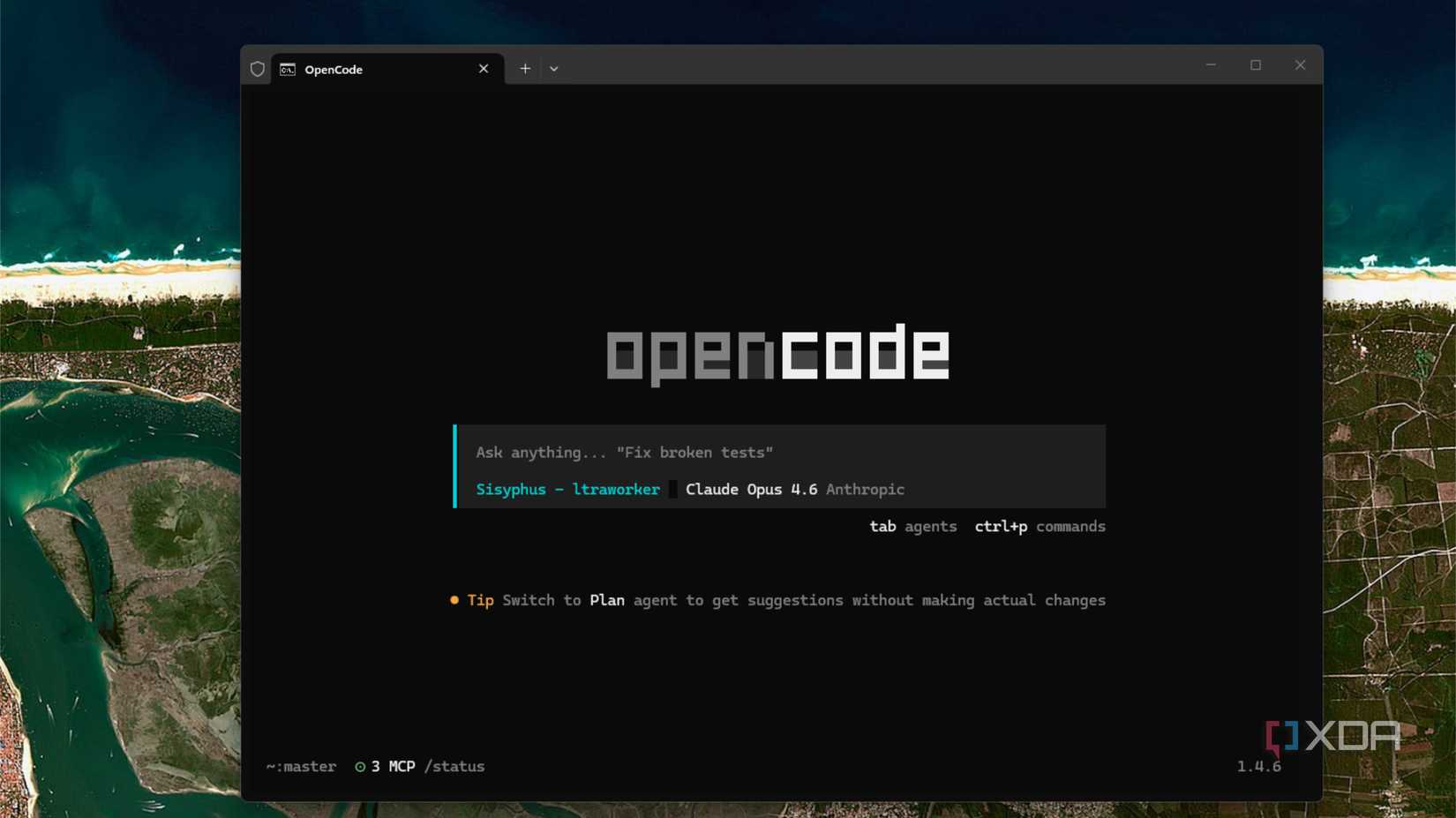
OpenCode is a great alternative to other agentic harnesses, sitting in your terminal interface and interfacing with over 75 different AI providers, including Claude, GPT, Gemini, OpenRouter, and Vercel AI Gateway, among others. While it’s good on its own, it’s also infinitely extensible, and Oh My OpenCode supercharges it.
The best part? You can get another LLM harness to install it for you, by telling it to in chat.
I used Claude Code because that’s what I had open at the time, but I could have used any of the other agentic tools with desktop access. Claude read the instructions in the markdown file on that GitHub link, and followed it to the letter. That included spawning a subagent to install OpenCode.
A few things needed my attention along the way, like asking for permission to download, and to work in the directory I specified, but a few minutes later, I was being asked to enter my LLM API keys so that Oh My OpenCode could get on with doing things.
The installation even handles all the minor details of setting up LLM plugins in OpenCode, leaving me only with the task of logging in to each provider and creating a new API key for Oh My OpenCode to use. It handles everything from fallback model options, to
The Oh My OpenCode system is set up to make things predictable and reliable. We all know the same prompt can yield different answers, but the system here aims to push LLMs through predictable loops with visibility and testing, so the end result is user-readable code ready for use.

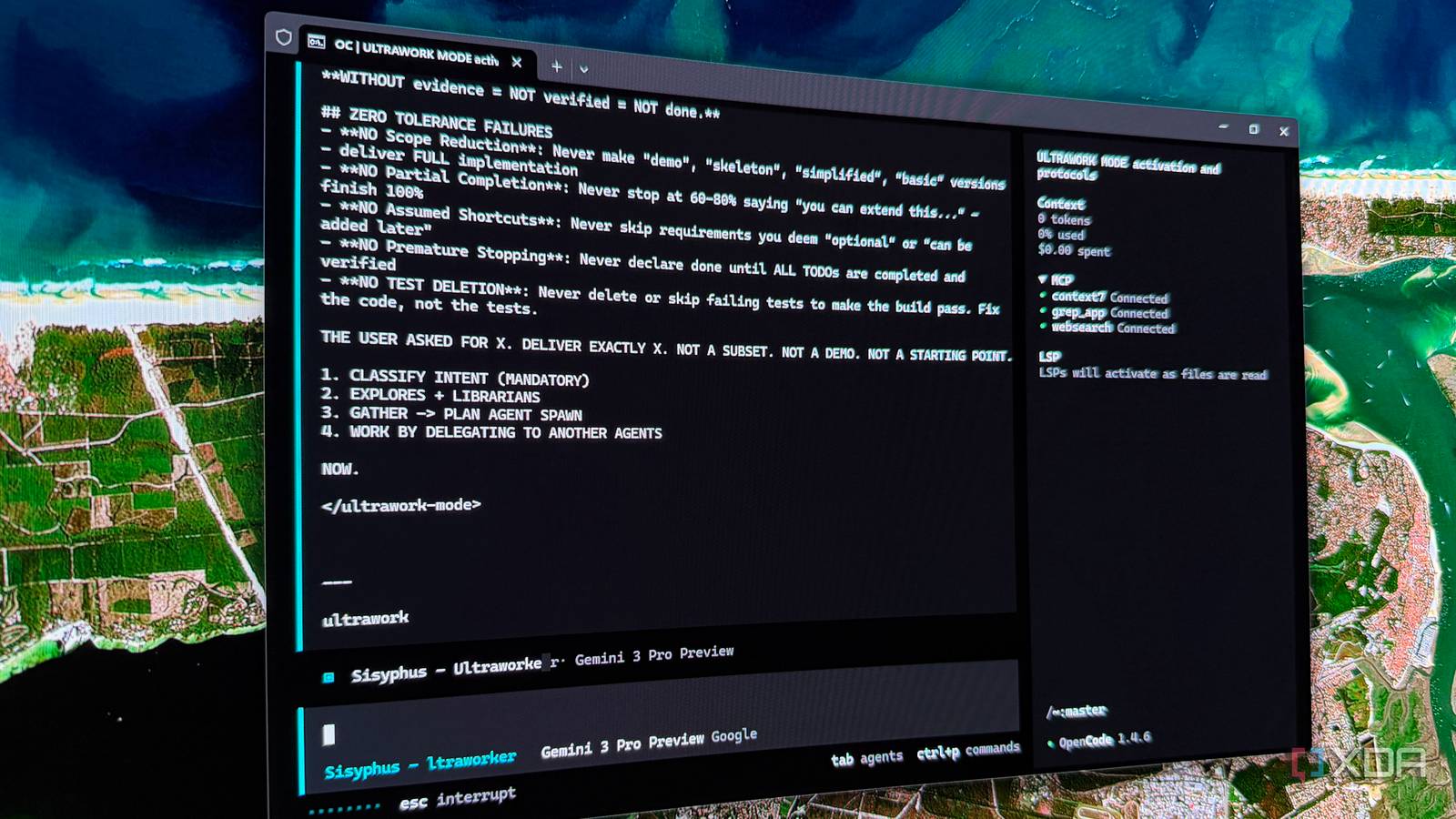
While the default interview style mode is handy for keeping an eye on things and making decisions, Ultrawork mode turns that up to 11 and takes the human element out of the equation. Say you want to add OAuth to the app you’re working on. You can say ulw add OAuth, and the agent will plan the approach and best practices, implement what it finds, then test until it works.
It’s pure vibe-coding, where you supply the intent and the goal, and the agent figures out the rest. LLMs have gotten to the stage where that’s perfectly workable, as long as they have the right framework of predictable harness around them, and that’s what Oh My OpenCode aims to provide.
I’ve spent enough time setting up AI tools to know that a single fat-fingered command can make the whole process fail, only to have to start again from the beginning. Even worse, you often have to remove things first, adding to the pain. Letting AI agents control the process instead is one of the tasks they’re suited for, and this was the easiest coding environment I’ve ever had to install. The only annoying part (as with any AI tool) is finding the API keys for my various LLMs, but that’s a given at this stage.
Why it matters
News like this often changes audience expectations and competitors’ plans.
When one player makes a move, others usually react — it is worth reading the event in context.
What to look out for next
The full picture will become clear in time, but the headline already shows the dynamics of the industry.
Further statements and user reactions will add to the story.