The topic of Most people ignore their router’s USB port, but it’s perfect for one… is currently the subject of lively debate — readers and analysts are keeping a close eye on developments.
This is taking place in a dynamic environment: companies’ decisions and competitors’ reactions can quickly change the picture.
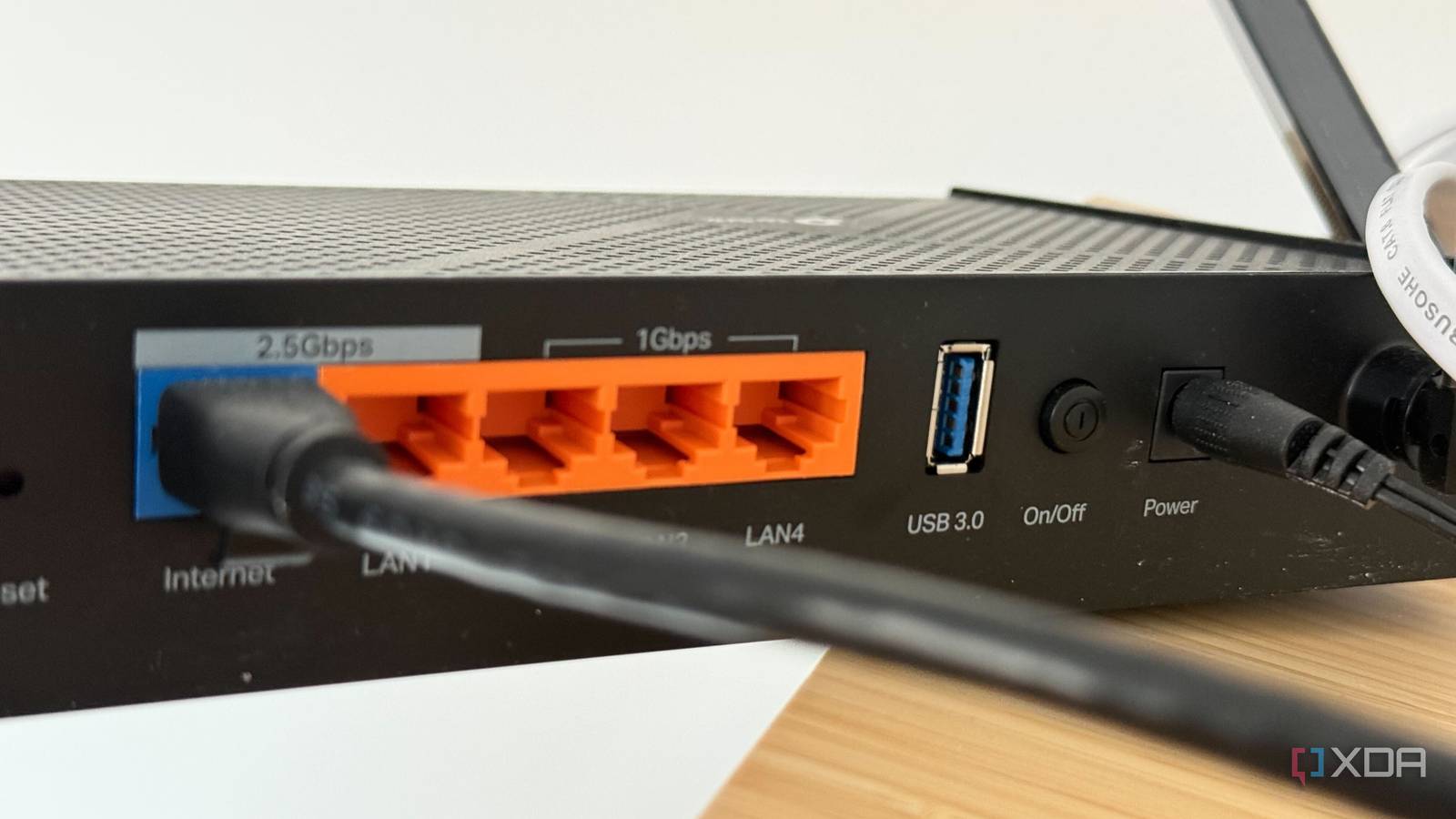
Somewhere between the power jack and Ethernet ports on your router lies a lonely USB port or two. Most of the time, these sit dormant, and remain unused for the lifespan of the router, and most people assume it’s for firmware updates via a USB stick, or maybe just for powering a small accessory. In reality, on most modern consumer routers, that port can turn a spare USB drive into a basic network share accessible by every device in your home. It’s not glamorous, and it’s nowhere near a proper NAS, but for the right use cases, it’s a genuinely useful trick hiding in hardware you already own.
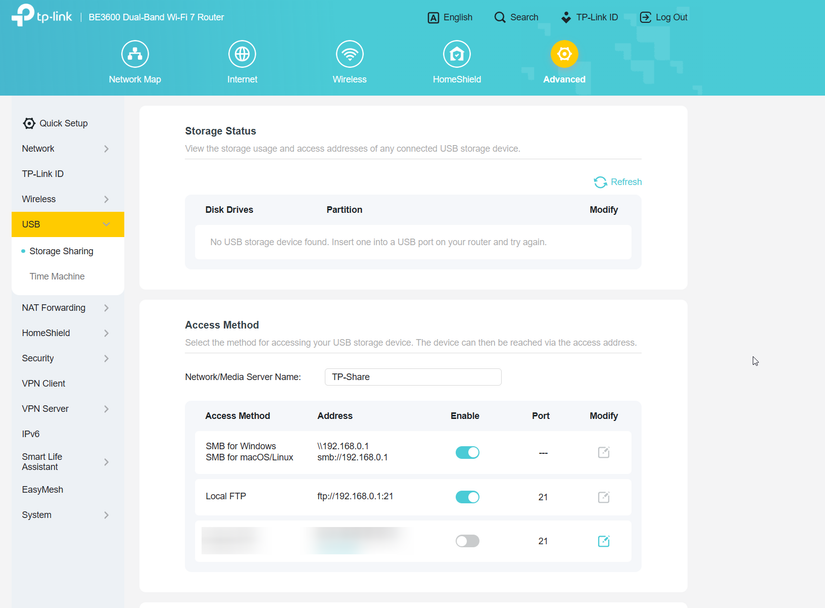
The process is simpler than most people expect. Plug a USB drive into the port, log into your router’s admin panel, and look for a USB storage or file sharing section. Most current routers from brands like ASUS, TP-Link, and Netgear expose the drive as an SMB share, an FTP server, or both. SMB is the more practical option for most home users since Windows, macOS, and Linux all support it natively, meaning the drive shows up in your file explorer the same way a network drive would.
On most modern routers, this can be done without additional software to install, and a USB drive doesn’t require any external power or ongoing subscription. It’s really simple and has a low barrier to entry for anyone who’s just discovering shared storage.
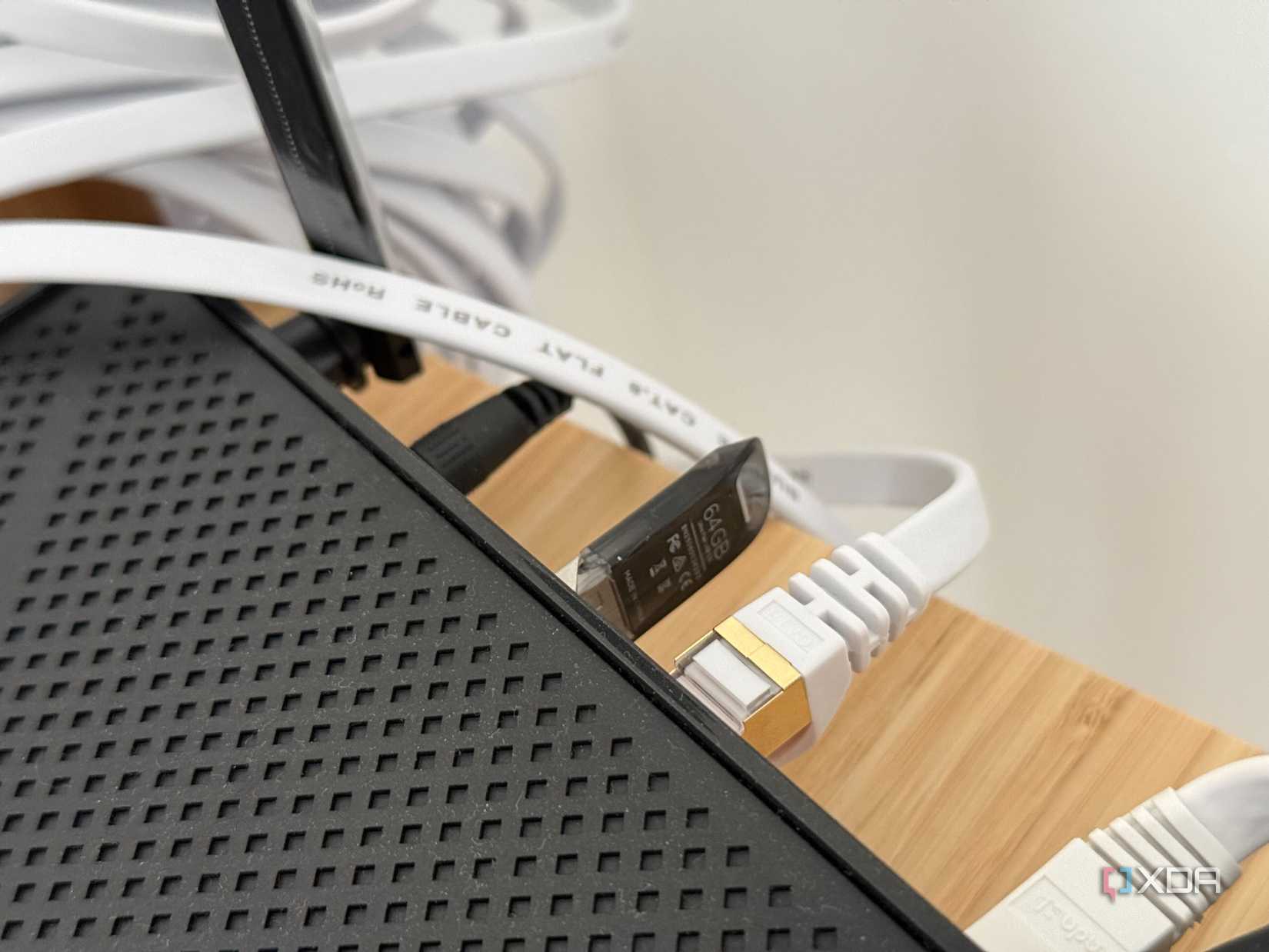
This kind of storage is a “network-attached-storage” in a literal sense, but if you treat it as something you use for occasional file drops or as a soft-backup point, it works well. I’ve used a 64GB USB stick in the back of my router as a destination to park some of the apps I commonly use on fresh installs, so as soon as I receive a new laptop in for review, or I’m reinstalling Windows on my workstation, I don’t have to go far to access all of the stuff that I’d normally have to download piecemeal.
The performance ceiling on router USB storage is low, and it’s low for hardware reasons that firmware updates won’t fix. Most consumer routers, even modern Wi-Fi 6 and Wi-Fi 6E models, run modest CPUs that were designed to route packets, not process file transfers. When you start pushing data through the USB port, that CPU has to handle the I/O, manage the SMB or FTP protocol overhead, and keep up with everything else the router is doing at the same time. In practice, router CPU usage can hit 100% during sustained transfers, which is exactly as bad as it sounds.
The speed numbers reflect this. Even on routers equipped with USB 3.0 ports, real-world SMB transfer speeds often land between 10 and 15 MB/s, which is well below what the port is theoretically capable of, and well below what a proper NAS or even a PC sharing a drive over SMB would deliver. On older routers with USB 2.0, speeds of 1 to 5 MB/s are common, which makes large transfers genuinely painful.
Beyond speed, there’s no redundancy. If the USB drive fails, the data is gone. There are no user-level access controls worth relying on for anything sensitive, no versioning, and no parity. The file system you format the drive with matters too: NTFS, which is the default for Windows machines, tends to perform worse on routers than exFAT or ext4, since NTFS isn’t natively supported by the Linux-based firmware running on most consumer routers and has to be handled through a compatibility layer.
This all essentially counts it out of ever being used for any serious NAS use case. It’s not fast, nor should it be relied upon for anything serious.
Before any of my devices touch the network, these settings are getting changed first
File sharing is the most practical use case for a router’s USB port, but it isn’t the only one worth knowing about. Some routers support connecting a USB printer, which the router then exposes as a network printer through a built-in print server. This was a more compelling feature before most printers shipped with Wi-Fi built in, but if you have an older USB-only printer you’d rather not retire, it’s a legitimate way to share it across the household without leaving a PC on as a print host. Some routers even accept a tethered Android phone as a substitute internet source, which is a useful emergency option even if it’s not something most people would set up proactively.
The USB port on the back of your router isn’t going to replace a Synology, and it was never meant to. But for a port that most people have never once thought about, it’s a useful thing to know about. A spare drive, five minutes in the admin panel, and you have shared network storage running on hardware that’s already on and already paid for. If you eventually find yourself wanting faster transfers, drive redundancy, or a real media server, a dedicated NAS is the obvious next step.
Why it matters
News like this often changes audience expectations and competitors’ plans.
When one player makes a move, others usually react — it is worth reading the event in context.
What to look out for next
The full picture will become clear in time, but the headline already shows the dynamics of the industry.
Further statements and user reactions will add to the story.