There is fresh movement around Google Drive’s new search upgrade is useless, but this trick finds your files…, and the story is worth a closer look.
We pulled together what is known so far and what it could mean for the people following it.
In Google’s quest to weave Gemini into everything, the search giant recently added AI Overviews (AIO) to Google Drive.
In theory, this feature is supposed to make it easier to find what you’re looking for in Google Drive. However, many folks, myself included, have found the reality quite different.
In short, Google Drive AI Overviews are a confusing mess. The “Get answers from Drive” box at the top often gives you responses to questions you never asked.
These latest changes have also removed the Gemini side panel, which provided a more focused natural language search. Now it’s an entirely separate chat window.
Thankfully, this is all easily ignored. You’ll just need to learn a few tricks to avoid bringing Gemini into the loop.
Google built AI Overviews more like a web search engine. The feature tries to provide context from your entire cloud footprint, which often results in giving you too much information.
It’s also slow. If I’m looking to find my last tax return, I don’t want to wait for a conversational summary. Just give me the PDF file so I can click it.
If I want an analysis, I can still ask for one. Gemini is quite good at that, but don’t give it to me unless I ask for it.
Although you’ll also get an immediate set of search results, those are even stranger, as they rarely match what Gemini comes up with after it’s had time to “think.”
Instead of enhancing my productivity, this new search kills it, forcing me to wait for an AI to over-explain things when I only want it to give me the file I’m looking for.
The good news is that Google hasn’t removed the simpler search — it obfuscated the search slightly behind Gemini’s “intelligence.”
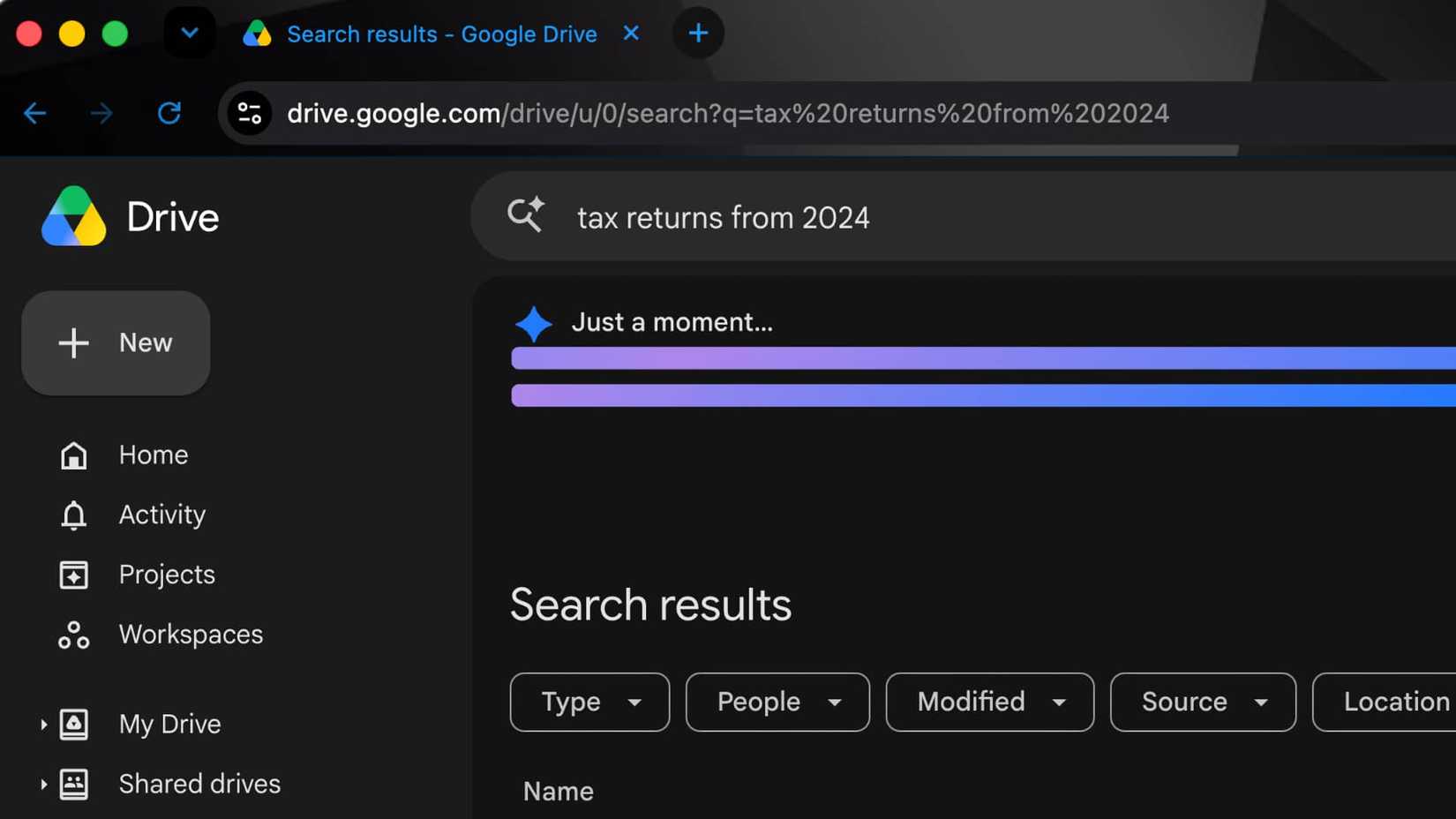
While typing a filename into the search box will now cause Gemini to analyze your request to death, you can still bypass this by using the same search keywords that have been around for years.
First, typing anything in the search box will provide a list of suggested matches. You can still type the forward slash (/) key to get there quickly without reaching for your mouse.
As long as you don’t press Enter, Gemini will remain quiet, and you can click a result or use the arrow keys to select it.
One-word searches also leave Gemini out of the equation, so things like “receipt” and “finance” will perform standard searches.
All bets are off as soon as you add a second word, though: “pixel” will do a standard search, “pixel 8” will wake up Gemini to try and “help” you.
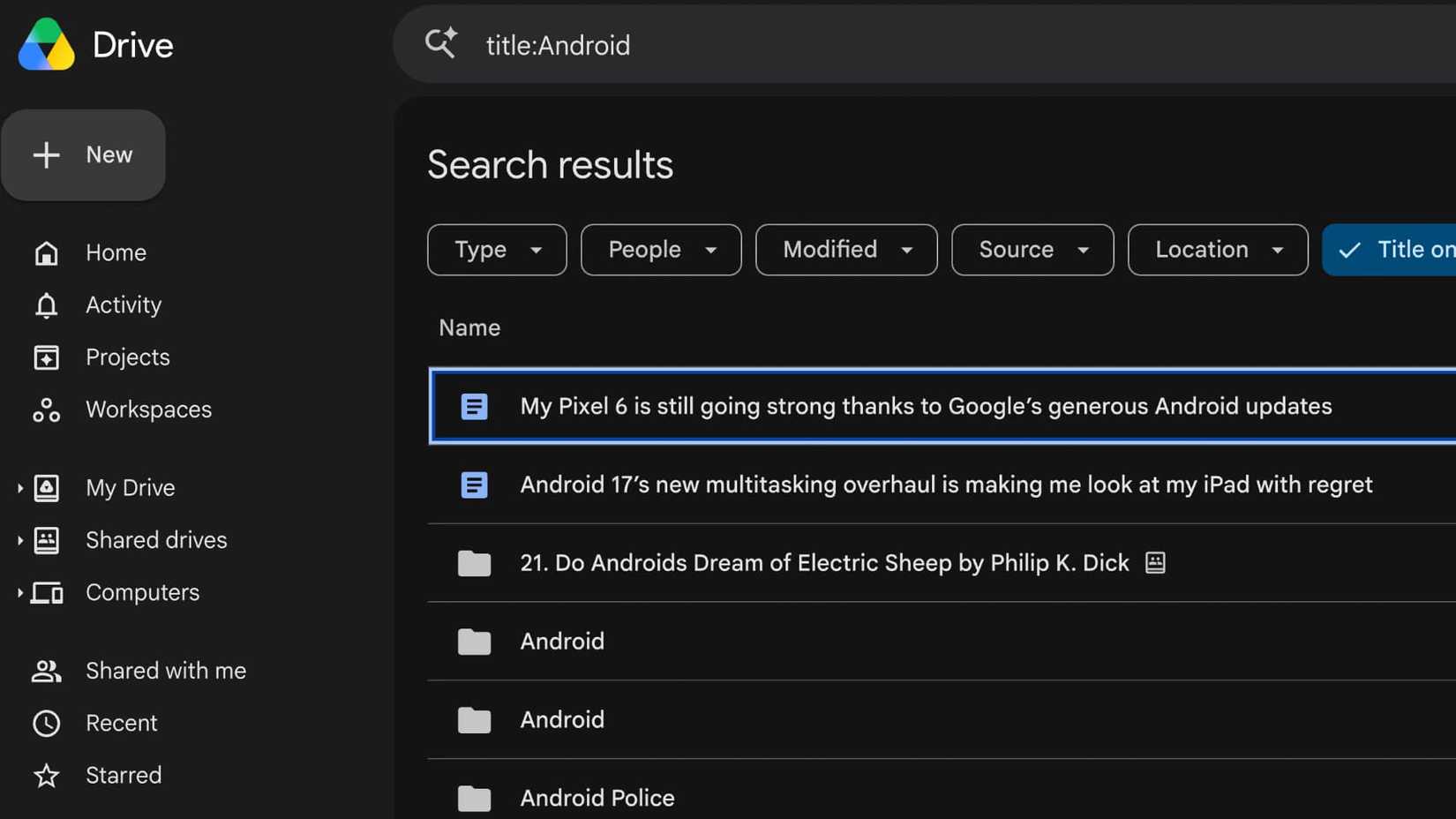
Using search operators will also override Gemini, turning the whole thing into a standard Drive search. Here are some examples:
As that last example shows, you don’t need to start with a keyword. Drive doesn’t process your string until you press Enter, so it skips Gemini if it sees any search operators.
Drive searches become a breeze when you have those keywords down, but if you need some help, you can click the sliders icon to the right of the search box.
This brings up the Advanced Search panel, where you can fill in the blanks to find exactly what you’re looking for.
While Drive AI Overviews are rolling out more slowly to mobile devices, the good news is that these tricks also work on Android and iOS.
I’m still mourning the loss of the Gemini side panel, as it was a great way to perform quick contextual searches (for example, “find my Amazon receipts in this folder”).
Fortunately, the replacement isn’t too bad for power users who want a more focused approach.
The biggest problem with Drive AIO on the main screen is that it’s a blunt instrument. It searches everything, even your Gmail, Chat, and Calendar, unless you turn those off.
By contrast, the new full-screen Ask Gemini interface is a scalpel. It lets you narrow things down using either natural language or adding them to the left side panel.
Ask Gemini will still search your other Google apps by default, but you can easily toggle that off with a switch in the lower-right corner.
With that off, you can provide a list of specific sources you want to query by clicking Add on the left side and browsing for folders, files, or even Gmail messages.
When that’s locked in, whatever you type as your prompt will use only that context, and nothing else.
However, you can also easily specify the context in your prompt. Here are some real-world examples I’ve used over the past few days:
Although these are handy when I want to correlate information or only have a vague idea of what I’m looking for, nothing beats a traditional search.
The most frustrating thing about Google’s new AI Overviews is that Google Drive already offers one of the best search engines.
It’s the number one reason I store my entire personal and professional life in Google Drive.
I have over 8 terabytes of information stored in my Google Workspace account. I’ve never had a problem finding anything, from current writing projects to decades-old reference materials.
Even obscure screenshots with cryptic filenames can be found by image recognition. Google has always excelled at this sort of thing.
Shoving Gemini into the mix doesn’t inherently make that better.
I’m genuinely glad that Ask Gemini is an option, but AI Overviews have transformed Google’s clean search interface into a bloated mess.
About the Author